
Kerala Mural Painting: A Perfect Blend of Art and Tradition
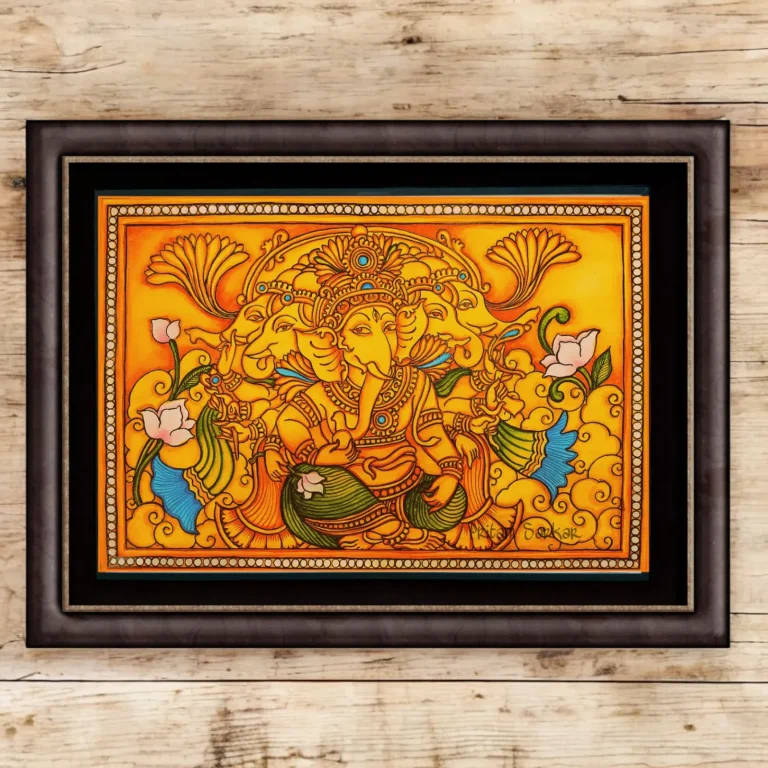
Kerala is known for its exotic beaches, breathtaking backwaters, and vibrant cultural heritage. Besides exploring its natural beauty, if you want to dive into its rich cultural heritage, start with Kerala Mural painting. Vivid colours, intricate patterns, and religious themes make the Kerala mural painting unique. The distinctiveness makes it one of the most cherished ancient art forms of India.
Kerala Murals: Glimpse of Its Rich Past and Heritage
The roots of Kerala mural paintings date back to the 8th Century AD. The Chera Dynasty ruled Kerala during this period and experienced significant growth from the 14th to the 16th centuries, largely due to royal patronage. The main artworks are frescoes that mainly depict characters and stories from Hindu mythology. Later, the Bhakti movement had a profound influence, and the impact of Hindu mythology began to grow. It is believed that the first mural art of Kerala was discovered in the Thirunandhikkara Cave temple in Kanyakumari (now in Tamil Nadu).
Before murals, the artisans used rocks as the canvas. Many rock engravings are found in the caves of Edakkal, located in the Wayanad district, and Perimkadavila. They are situated in the Thiruvananthapuram district, both in the state of Kerala. Mural painting on rock has also been found in the Anjanad valley of Idukki district. All of these works are prehistoric artworks. The Sanskrit texts, such as Chithrasoothram, Tantrasamuchaya, Abhilashitartha Chintamani, and Silparatna, have histories and scriptures related to this art form.
Between the 9th and 12th centuries BCE, the art began to receive more royal patronage, which helped it gain worldwide recognition. However, during the British era, the art form suffered enormously, even at the danger of extinction. After Independence, the art form reimagined its respect and acceptance.
Mural Paintings: Where Mythology Meets the Canvas and showcases the Indian Rich Legacy in Art
Kerala mural paintings are so unique that even in an art exhibition, they can be easily distinguished. It is still as popular as it was in ancient India. However, the art form has a long and storied history. Initially, it began with local topography and natural elements, featuring lotus flowers, elephants, peacocks, and other natural features. Over time, and with the influence of changes surrounding the art form, it began to focus on Hindu mythology and religion. Hindu epics like Ramayana and Mahabharat find great significance in the style of Kerala Murals.
The murals became a means of sharing stories from Hindu mythology. Gods, goddesses, historical characters, events, folklore, and traditional cultural practices became integral parts of the art.
Mural Paintings: Made with Love and Spreading the Legacy
The process of creating a mural art painting is time-consuming and requires significant effort. A layer of fresh ground was prepared by plastering it with a mixture of lime, clean sand, and cotton. Artists use 25-30 washes of a mixture of quick lime and the juice of tender coconut.
There are two styles of frescoes: a dry fresco and a wet fresco (the mural was created while the plaster was still wet). Initially, the outline is drawn, and then the colours are filled in to avoid any mistakes. Seasoned artisans use fine brushes coloured with natural pigments made from minerals, plants, and gemstones to create these paintings.
Kerala mural paintings have undergone notable evolution, and there are now many modern and contemporary styles. Only free places offer traditional paintings. If you are looking for a reliable vendor for a Kerala Mural painting, contact us.
At Ample Handicraft, we offer authentic Kerala Mural paintings. Committed to promoting Indian art, we offer a diverse range of traditional handicrafts.
Contact to book a painting now.